Expert, compassionate guidance on fertility, IVF and your journey to parenthood — reviewed by our specialists.

Carrying a balanced translocation can raise the chance of pregnancy loss, and pre implantation genetic testing may help doctors choose embryos for transfer. This guide explains how PGT-SR works, what it can and cannot detect and what outcomes to realistically expect.
Very low sperm count or no sperm on your report? IVF genetic testing can help explain why and guide your treatment choices. This guide covers karyotype and Y-microdeletion tests, what the results mean for ICSI and what to ask your specialist.
Thinking about pregnancy after 45? Your choice depends on how an embryo can be created, whether carrying a pregnancy is safe for you and what the law allows. This guide explains the medical checks, donor egg options and surrogacy rules in India.
Found a fibroid on your scan? Its type and location decide whether it may affect pregnancy or can safely wait. This guide explains the FIGO classification in simple terms and what to discuss with your fertility specialist.
After an unsuccessful IVF cycle, a second opinion can help you understand what happened before you choose your next step. This guide covers when to seek one, which records to bring and how to compare clinics beyond advertising claims.
A semen report showing no sperm is worrying, but the reasons for azoospermia decide whether it can be treated or reversed. This guide explains the causes, how the result is confirmed and the fertility options that may still be available.
Taking metformin for PCOS and just got a positive pregnancy test? The right step depends on why it was prescribed, so speak to your doctor before changing anything. This guide explains what doctors consider and the questions worth asking.
Wondering if your sperm count is high enough for IUI? Doctors look at motile sperm, post-wash count and TMSC rather than one number alone. This guide explains what each measurement means and when IVF may be discussed.
Thinking about freezing eggs? Egg survival after thawing is not the same as the chance of a baby, and knowing the difference helps you read success rates with confidence. This guide explains what each figure measures and the questions to ask your fertility specialist.
Sperm take two to three months to develop, so improvement is not instant. Follow this 12-week plan to boost male fertility and know when to retest.
Both influence an IVF cycle — but not as much as people fear, and not in the ways most often assumed. Here's where they actually act, and how much of it you can change before you start.
For many couples this is the conversation they were least prepared for. Here's when donor eggs are genuinely the right recommendation, how donors are screened, and what the law requires.
Fewer injections, fewer eggs, lower cost per cycle. A genuinely good option for a specific group of women — and a quiet disadvantage for everyone else.
Four advanced selection techniques that sit alongside ICSI. What each one actually does, who genuinely benefits — and when adding it changes nothing but the bill.
Good embryos, a good lining, and still a negative test. Here's what's actually being investigated after repeated failed transfers — and what should change before you try again.
Four different procedures, often used interchangeably in conversation — but chosen for very different reasons. Here's which one suits which situation, and why.
An easy first pregnancy doesn't predict fertility today. Learn how egg number and quality change, what secondary infertility means, when to see a specialist, and which options may be discussed for pregnancy after 45.
Azoospermia means no sperm is seen in the semen sample, but biological fatherhood may still be possible. Learn the possible causes, the role of varicocele, and the sperm retrieval and IVF-ICSI options.
Sperm health can change after 40, but low sperm count does not always mean pregnancy is out of reach. Learn the possible causes, how it is tested, what may help, and which treatments couples may consider.
Fertility depends on both partners. Learn what male infertility is, what can cause it, why both partners should be tested together, and how to choose an IVF doctor who plans treatment after a complete evaluation.
Every age-related fertility article focuses on the woman. Here's what actually changes in male fertility with age, how much it affects IVF outcomes, and what can be done about it.
A practical, reassuring guide to stimulation medication — what to expect day by day, how to manage it at home, and the specific signs that mean you should pick up the phone.
Could blocked tubes be why you can't conceive? A detailed guide to causes, the SSG and HSG tests, laparoscopy, and how doctors decide between tubal surgery and IVF.
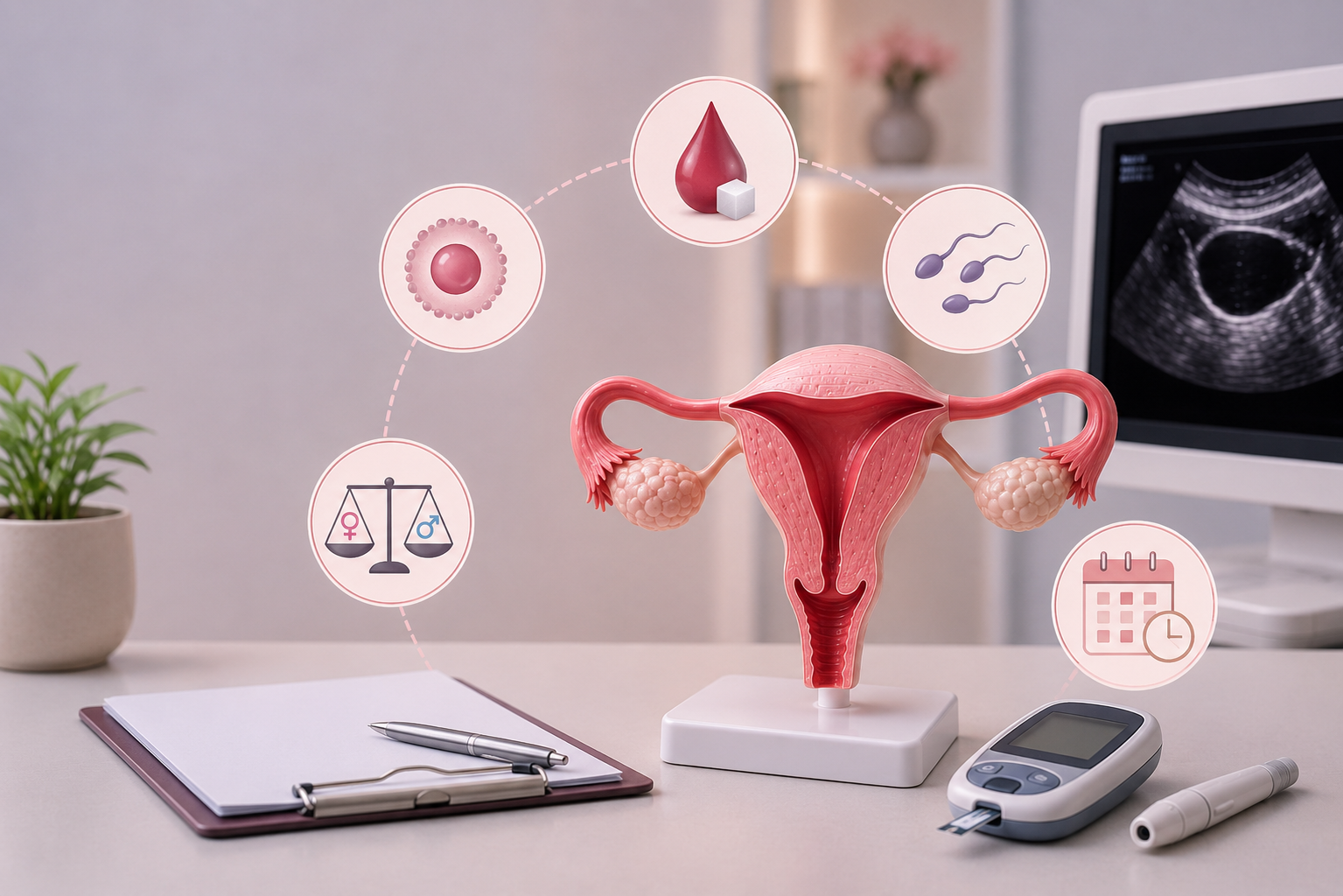
Most content covers diabetes and high-risk pregnancy. Here's how diabetes and prediabetes actually affect your chances of conceiving in the first place — for both partners.