
Medical Disclaimer
This article is for informational purposes only and does not substitute professional medical advice, diagnosis, or treatment. Always consult a qualified healthcare provider before making any health-related decisions.
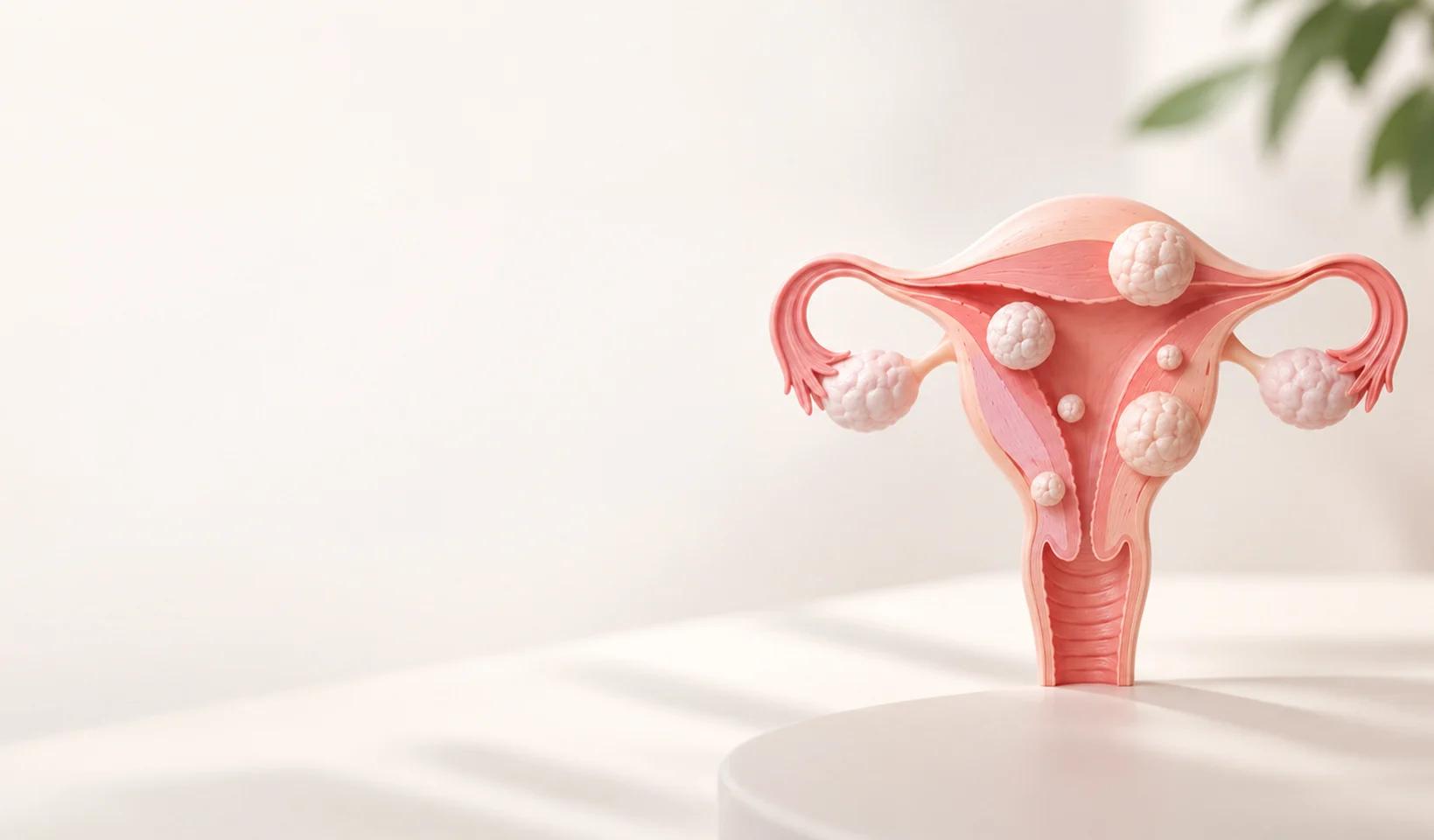
Types of Fibroids by FIGO Classification: Which Type Affects Fertility and Which Can Wait?
If a scan shows a fibroid, you may wonder whether it could affect pregnancy or whether it needs to be removed. The answer depends on its location, size and symptoms.
Understanding the types of fibroids can help you make sense of your scan and discuss the next step with your fertility specialist.
What Are Fibroids?
Fibroids are usually non-cancerous growths in or around the uterus. Some cause heavy periods, pain or pressure, while others are found during a routine scan.
Not every fibroid affects fertility, and not every fibroid needs surgery.
What Is the FIGO Classification?
The FIGO-(International Federation of Gynecology and Obstetrics) system gives fibroids a number based on where they sit in relation to the uterus.
The numbers help doctors describe whether a fibroid is close to the inner lining, within the muscle wall or towards the outside.
What Do the Different Numbers Mean?
The main types of fibroids are:
- Type 0: inside the uterine cavity, attached by a stalk
- Type 1: projecting into the cavity, with less than half within the muscle wall
- Type 2: projecting into the cavity, with at least half within the muscle wall
- Type 3: within the wall and touching the inner lining, without projecting into the cavity
- Type 4: entirely within the muscle wall, without touching the lining or outer surface
- Types 5 and 6: extending towards the outside of the uterus, with different amounts within the wall
- Type 7: outside the uterus, attached by a stalk
- Type 8: in another location, such as the cervix
Your doctor can show you where the fibroid sits on your scan. You do not need to memorise every number.
Which Fibroids May Affect Fertility?
Fibroids that change the shape of the uterine cavity deserve particular attention when pregnancy is planned. Types 0, 1 and 2 can project into this space.
Your specialist may recommend further assessment or removal in selected cases. Other types of fibroids need an individual review because their effect on fertility is less straightforward.
Does Every Fibroid Need to Be Removed?
No. Your doctor may consider:
- Whether the uterine cavity is affected
- The size and number of fibroids
- Heavy bleeding, pain or pressure
- Your fertility history
- The possible benefits and risks of surgery
- How surgery might affect your treatment timeline
A fibroid does not automatically explain an earlier pregnancy loss or unsuccessful IVF cycle.
When Can a Fibroid Be Monitored?
A fibroid that causes no symptoms and does not change the uterine cavity may be monitored, depending on its size and location.
Ask how often you need follow-up and what changes would make treatment necessary.
Understand Your Scan Before Deciding
At Bavishi Fertility Institute, you can discuss your scan findings in relation to your pregnancy plans. Bring the scan images as well as the written report.
About the Author

Dr. Parth Bavishi
MBBS, MD (Obstetrics & Gynaecology)
Co-director & IVF Specialist
Dr. Parth Bavishi holds an MD in Obstetrics and Gynaecology and brings over 12 years of specialist experience as Co-director and IVF Specialist at Bavishi Fertility Institute — a group of fertility centres across India committed to helping couples realise their dream of parenthood. His clinical focus is on complex and challenging cases, including male-factor infertility and repeated IVF failure. He has received specialised infertility training at Bavishi Fertility Institute, the Diamond Institute (USA) and the HART Institute (Japan), and is the author of 'Your Miracle in Making: A Couple's Guide to Pregnancy.'