
Medical Disclaimer
This article is for informational purposes only and does not substitute professional medical advice, diagnosis, or treatment. Always consult a qualified healthcare provider before making any health-related decisions.
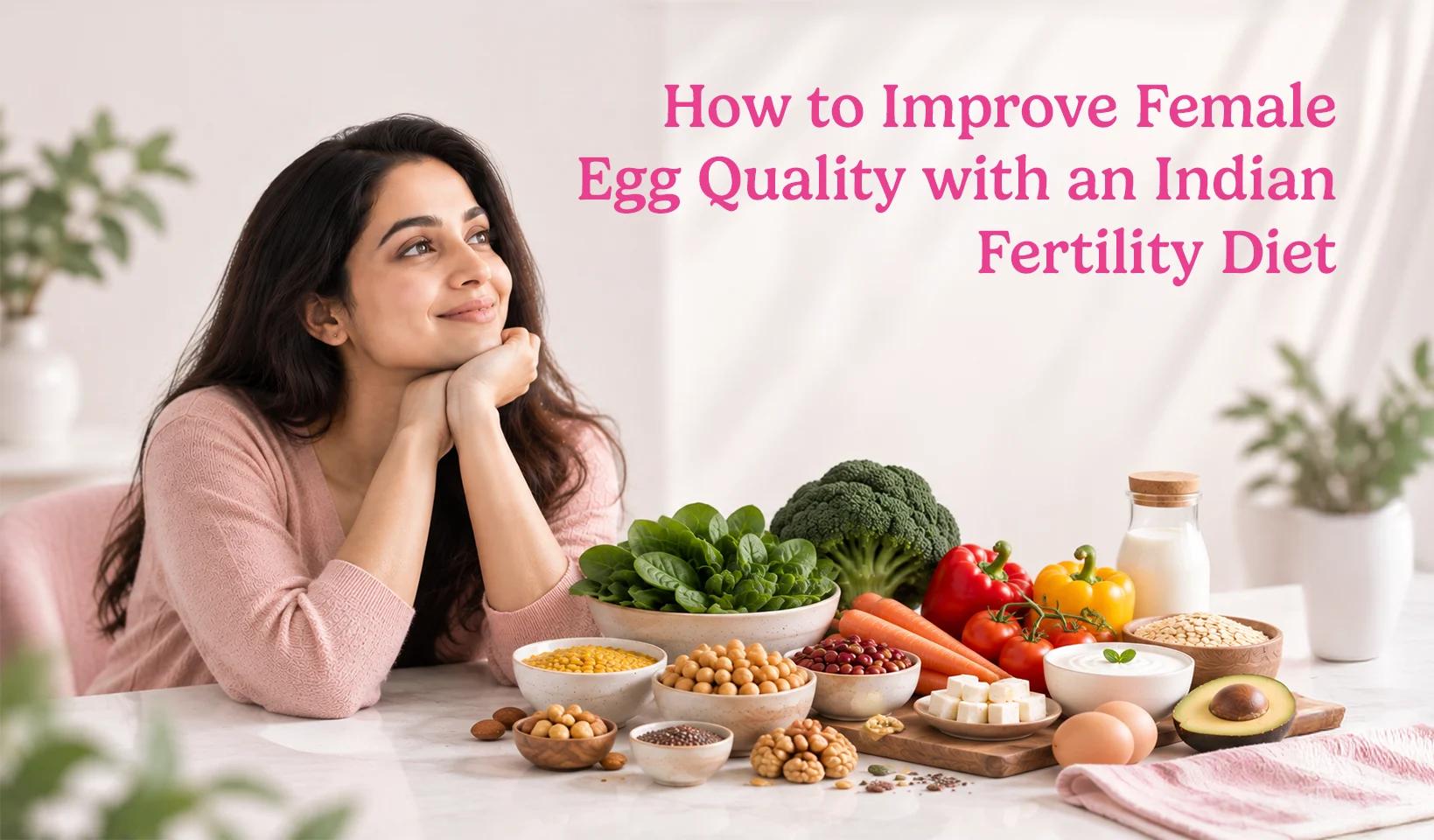
How to Improve Female Egg Quality with an Indian Fertility Diet
When trying to conceive, many women wonder if their diet can improve egg quality. While there is no specific food or diet that can guarantee better egg quality, eating a balanced and nutritious diet can support overall reproductive health.
Egg quality is influenced by several factors, including age, genetics and overall health. However, a healthy lifestyle and good nutrition can help create a supportive environment for fertility.
What Should a Fertility-Friendly Indian Diet Include?
1. Include Plenty of Vegetables
Choose a variety of colourful vegetables such as:
- Spinach and other leafy greens
- Broccoli
- Carrots
- Bell peppers
- Tomatoes
- Beans and other seasonal vegetables
These provide important vitamins, minerals and antioxidants.
2. Choose Protein-Rich Foods
Protein is an important part of a balanced fertility diet. Good Indian options include:
- Dal and pulses
- Rajma and chickpeas
- Paneer and curd
- Tofu and soy
- Eggs, if you eat them
- Nuts and seeds
Try to include a protein source in every major meal.
3. Add Healthy Fats
Healthy fats can be part of a balanced diet. Include foods such as:
- Walnuts
- Almonds
- Pumpkin seeds
- Flaxseeds and chia seeds
- Avocado
- Seeds and plant-based oils in moderation
4. Choose Whole Grains
Replace refined grains with nutritious options where possible:
- Whole-wheat roti
- Oats
- Brown rice
- Millets
- Quinoa
These provide fibre and other important nutrients.
5. Eat Fresh Fruits
Include a variety of seasonal fruits such as pomegranates, oranges, guava, berries, apples, pomegranate and papaya.
Choose whole fruits rather than packaged juices to get more fibre.
Simple Indian Fertility Diet Example
Breakfast: Moong dal chilla with paneer + fruit
Mid-morning: Fruit + handful of nuts
Lunch: Roti/brown rice + dal + vegetables + curd
Evening: Roasted chana or sprouts chaat
Dinner: Roti + paneer/tofu + vegetables
Bedtime: Milk, if suitable for you
What Foods Should You Limit?
Try to reduce:
- Highly processed foods
- Excess sugar and sugary drinks
- Trans fats and excessive fried foods
- Excessive alcohol
- Smoking and tobacco
Maintaining a healthy weight, exercising regularly, sleeping well and managing stress are also important for overall reproductive health.
Can Diet Reverse Poor Egg Quality?
Diet cannot reverse age-related changes in egg quality or guarantee pregnancy. Egg quality is strongly influenced by age and other individual factors.
If you have been trying to conceive or are planning fertility treatment, a fertility specialist can assess your reproductive health and guide you on the right steps.
The Bottom Line
There is no single “fertility food” that improves egg quality. Instead, focus on a balanced Indian diet rich in vegetables, fruits, whole grains, protein, healthy fats, nuts and seeds.
Good nutrition, combined with a healthy lifestyle and timely fertility care, can support your overall reproductive health.
At Bavishi Fertility Institute, our fertility specialists can help you understand your fertility health and recommend personalised guidance based on your individual needs.
Disclaimer: This blog is for general educational purposes only and does not replace personalised medical advice. Fertility and nutritional requirements can vary from person to person.
About the Author

Dr. Parth Bavishi
MBBS, MD (Obstetrics & Gynaecology)
Co-director & IVF Specialist
Dr. Parth Bavishi holds an MD in Obstetrics and Gynaecology and brings over 12 years of specialist experience as Co-director and IVF Specialist at Bavishi Fertility Institute — a group of fertility centres across India committed to helping couples realise their dream of parenthood. His clinical focus is on complex and challenging cases, including male-factor infertility, poor sperm quality, high sperm DNA fragmentation and repeated IVF failure. He has received specialised infertility training at Bavishi Fertility Institute, the Diamond Institute (USA) and the HART Institute (Japan), and is the author of 'Your Miracle in Making: A Couple's Guide to Pregnancy.'