
Medical Disclaimer
This article is for informational purposes only and does not substitute professional medical advice, diagnosis, or treatment. Always consult a qualified healthcare provider before making any health-related decisions.
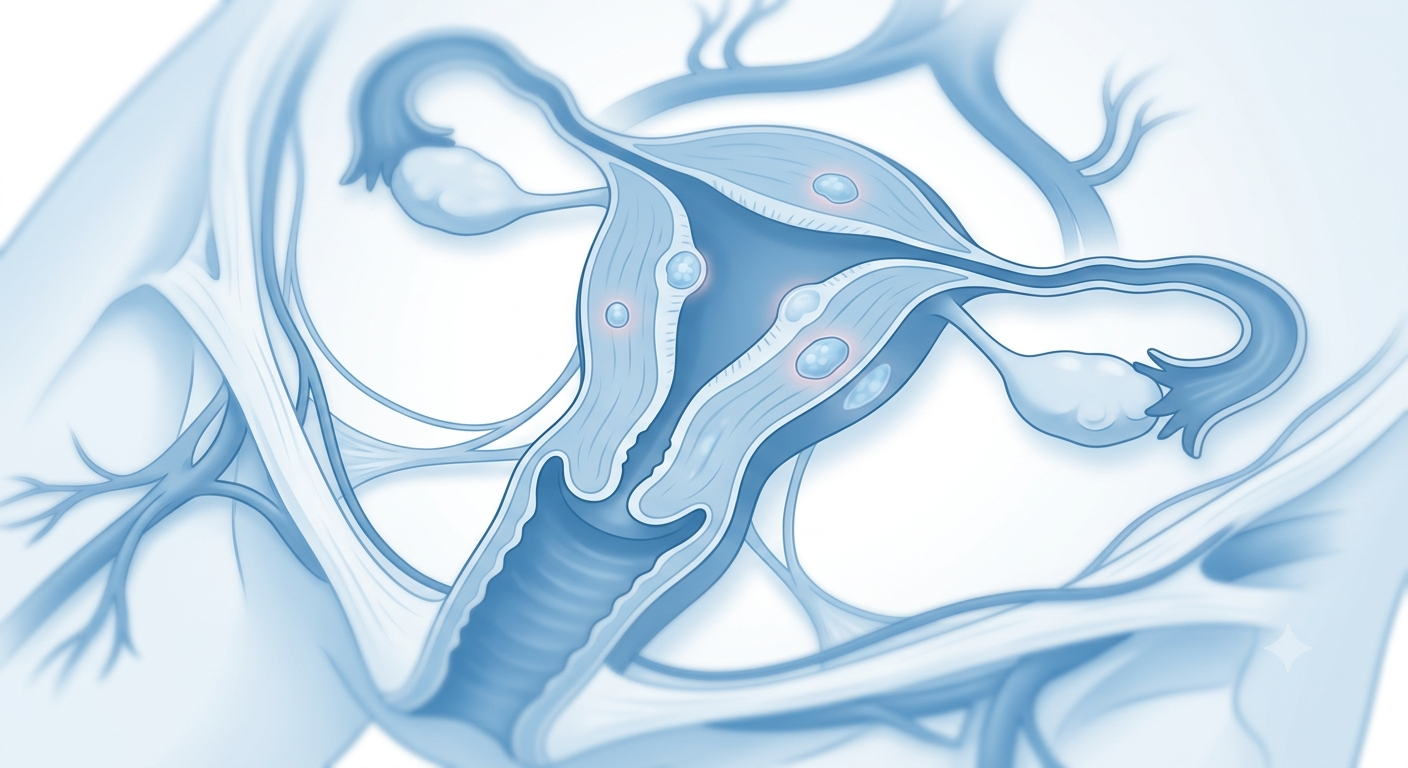
Fibroids and IVF: Should you remove them before treatment?
0%
Conceive with first-line treatment
0+
Years of expertise at BFI
15-20
Eggs recommended for freezing
0%
Ovulation rate with letrozole
Comprehensive female fertility solutions
PCOS prevalence
1 in 10 women
Treatment success
70-90% conceive
Egg freeze survival
90% vitrification
Best suited for: Women with PCOS, endometriosis, diminished ovarian reserve, uterine fibroids, recurrent miscarriage, or those planning fertility preservation through egg freezing.
Uterine fibroids, those pesky growths that affect up to 70% of women, can be a major roadblock to achieving pregnancy. As an IVF hopeful, you’re probably wondering if removing them is the key to success. Let’s dive in and explore the world of fibroids, their impact on fertility, and how Bavisi Fertility Institute approaches treatment.
Understanding fibroids: Types and Impact
Fibroids can grow in various locations within the uterus, each with its own set of challenges:
- Submucosal fibroids: These growths develop inside the uterine cavity and can interfere with implantation, cause heavy bleeding, and increase the risk of miscarriage.
- Intramural fibroids: Growing within the uterine wall, these fibroids may affect uterine contractions and fertility.
- Subserosal fibroids: Typically asymptomatic, these growths on the outside of the uterus may cause pressure or discomfort.
3 Types of Uterine Fibroids
When are fibroids harmful?
Not all fibroids are created equal. Be aware of these red flags:
- Size matters: Large fibroids (>5 cm) may cause issues with implantation, pregnancy, or delivery.
- Location: Submucosal fibroids can be particularly problematic, while subserosal fibroids often aren’t a concern.
- Symptoms: Heavy bleeding, pelvic pain, or pressure can indicate a problematic fibroid.
- Fertility impact: Distortion of the uterine cavity or blockage of fallopian tubes can hinder conception.
To remove or Not to remove?
At Bavisi Fertility Institute, we take a customized approach. If the fibroid isn’t significantly impacting fertility or causing symptoms, we often recommend leaving it alone. Our goal is to achieve a healthy pregnancy, not unnecessary surgery.
Removal options:
- Myomectomy: Surgical removal of the fibroid, often performed laparoscopically or hysteroscopically.
- Uterine Artery Embolization (UAE): Minimally invasive procedure that cuts off blood supply to the fibroid.
- Focused Ultrasound Surgery (FUS): Non-invasive treatment using high-frequency sound waves to shrink the fibroid.
Pre-IVF checklist:
- Ultrasound Evaluation: Assess fibroid size, location, and impact on the uterine cavity.
- Hysteroscopy: Visual examination of the uterine cavity to detect any abnormalities.
- Symptom Evaluation: Assess the impact of fibroids on fertility and overall health.
Our Approach at Bavisi Fertility Institute
We prioritize your overall health and fertility goals. Unless the fibroid is significantly impacting your chances of conception or poses a risk to pregnancy, we’ll focus on IVF treatment first. Our expert team will guide you through every step, ensuring the best possible outcome for you and your future baby.
Case-by-Case Approach
Every patient’s situation is unique, and we’ll work with you to determine the best course of action. If removal is necessary, we’ll discuss the most suitable option for your specific case.
Conclusion
Fibroids do not have to stand in the way of your dream of parenthood. With the right diagnosis, timely treatment, and expert fertility guidance, many women with fibroids can successfully conceive and enjoy a healthy pregnancy. At Bavishi Fertility Institute, we are committed to providing personalized care, advanced fertility solutions, and compassionate support at every stage of your journey.
If you are struggling with fibroids and planning for pregnancy, book a consultation with the fertility experts at Bavishi Fertility Institute today and take the first step toward building your family with confidence.
| Fibroid Type | Effect on IVF | Remove Before IVF? |
|---|---|---|
| Submucosal | Distorts cavity | Yes — usually remove |
| Intramural (large) | May lower success | Case-by-case |
| Intramural (small) | Little effect | Often leave |
| Subserosal | Outside cavity | Usually leave |
| Decision | Size & location matter | Individualised |
Key Takeaways
Understanding fibroids: Types and Impact
When are fibroids harmful?
To remove or Not to remove?
Removal options:
Pre-IVF checklist:
For personalised advice tailored to your test results and diagnosis, book a consultation with our specialists at Bavishi Fertility Institute.
Have Questions About Fibroids IVF Should remove?
Book a free consultation with our fertility specialists at Bavishi Fertility Institute — 14 centres across India.
About the Author

Dr. Parth Bavishi
MBBS, MD (Obstetrics & Gynaecology)
Co-director & IVF Specialist
Dr. Parth Bavishi holds an MD in Obstetrics and Gynaecology and brings over 12 years of specialist experience as Co-director and IVF Specialist at Bavishi Fertility Institute — a group of fertility centres across India committed to helping couples realise their dream of parenthood.
His clinical focus is on complex and challenging cases: male-factor infertility, poor sperm quality, high sperm DNA fragmentation, and repeated IVF failure. He has received specialised infertility training at three internationally recognised institutions — Bavishi Fertility Institute, the Diamond Institute (USA), and the HART Institute (Japan) — giving him a uniquely broad perspective on the latest global advances in reproductive medicine.